


God is Faithful: the Story of Leah
Did you know that our Northside Writers’ Group writes devotions for Table Groups? What’s a Table Group, you ask? Head back over to the Northside Women main page and click the link at the bottom of the page to find out! (You’ll be glad you did.) This year, all of our devotions will be exploring God’s faithfulness to women in the Old Testament. The following is adapted from our February devotion:
God Is Faithful: The Story of Leah
By: Alaina Mankin
“Now Laban had two daughters; the name of the older was Leah, and the name of the younger was Rachel. Leah had weak eyes, but Rachel had a lovely figure and was beautiful. Jacob was in love with Rachel and said, ‘I'll work for you seven years in return for your younger daughter Rachel.’ Laban said, ‘It's better that I give her to you than to some other man. Stay here with me.’ So Jacob served seven years to get Rachel, but they seemed like only a few days to him because of his love for her.” (Gen. 29:16-20, NIV)
[Sigh…] These verses in Genesis read like a romance novel. But, if you’ve read the rest of the chapter, the story of Jacob and Rachel is less like a romance and more like a daytime talk show (the kind that would end with lots of yelling and hair-pulling). At the end of Jacob’s seven-year indenture, Laban prepares the promised bridal feast and brings Jacob his veiled bride. But when the sun rises the next morning, Jacob realizes he’s been fooled. The woman next to him is not Rachel, but her less-desirable sister—Leah.
Jacob is outraged. He demands an explanation from Laban who explains, “It is not the custom in our country to give the younger daughter in marriage before the firstborn. Complete this week of wedding celebration, and we will also give you this younger one in return for working yet another seven years for me.” (Gen. 29:26). Jacob does just that, and, after a week’s delay, he has his beloved Rachel.
And Leah? How must she feel?
Scripture doesn’t tell us if Leah was complicit in her father’s scheming, but we do know that women in the ancient world had little control over their own lives. Marriage may have looked different in the Patriarch Era – more contractual, less romantic – but there existed something within Rachel and Leah that recoiled over the idea of sharing a husband. We were created as monogamous creatures, after all. Perhaps God had Rachel and Leah in mind when he gave the nation of Israel this prohibition in Leviticus 18:18: “Do not take your wife's sister as a rival wife and have sexual relations with her while your wife is living.” The consequences of Jacob’s and Laban’s actions were jealousy, animosity, and sibling rivalry that eventually leads to attempted murder. But in spite of all this dysfunction, God uses Jacob’s family to take humanity one generation closer to the promised Messiah.
One of my favorite recurring themes in the Bible is God's compassion for the unloved. We read over and over again that He is the champion of orphans and widows. He protects the foreigner. He touches the untouchable. He humbles the proud and elevates the lowly. And when “the LORD saw that Leah was not loved, he enabled her to conceive, but Rachel remained childless.” (Gen. 29:31)
Leah was unlikely to be Jacob's chosen partner. Jacob was straight-forward with his intentions regarding Rachel when he went to Laban at the completion of his seven years of labor: “Then Jacob said to Laban, ‘Give me my wife. My time is completed, and I want to make love to her.’” (Gen. 29:21) The sexual attraction was strong. Rachel likely had more opportunities to conceive. But God opened the womb of the unloved wife and closed the womb of the loved. In that culture, to give birth to children was a sign of blessing –- to give birth to a son, even more so. Sons had economic value and could provide for elderly parents. Leah knew it was because of God’s compassion for her that she conceived a son. But the knowledge that God loved her was not enough. She also yearned for her husband’s love:
“She named him Reuben, for she said, ‘It is because the LORD has seen my misery. Surely my husband will love me now.’” (Gen. 29:32) He didn’t. But even if Jacob did not care for Leah, God did. “She conceived again, and when she gave birth to a son, she said, ‘Because the LORD heard that I am not loved, he gave me this one too.’ So she named him Simeon. Again she conceived, and when she gave birth to a son she said, ‘Now at last my husband will become attached to me, because I have born him three sons.’ So he was named Levi.” (Gen. 29:33-34)
Three sons. Three signs from God that Leah is loved by her Creator, that He sees her, that He has compassion for her. And each time she exchanges her identity as God’s beloved daughter for Jacob’s unloved wife. But God doesn’t give up His pursuit of us just because our eyes are fixed on the wrong thing. “She conceived again, and when she gave birth to a son, she said, ‘This time I will praise the LORD.’ So she named him Judah. Then she stopped having children.” (Gen. 29:35)
For a moment, Leah stopped striving for Jacob’s affection and instead recognized the One whose love for her was unconditional and unchanging. I believe God honored Leah’s heart in that moment. Flip ahead several thousand years to the genealogy of Christ that begins the Gospel of Matthew. In the opening verses we read: “This is the genealogy of Jesus the Messiah the son of David, the son of Abraham: Abraham was the father of Isaac, Isaac the father of Jacob, Jacob the father of Judah.” (Matt. 1:1-3)
The Savior of the world – the Messiah God promised as far back as Adam and Eve—came from the line of Jacob by way of Leah’s fourth son. The birth of Judah didn’t end Leah’s struggle for acceptance. In the next chapter we see both Leah and Rachel handing over their maid servants in order to give Jacob children by proxy. How quick we are to forget God’s faithfulness to us. In total, Leah gave birth to six sons and one daughter, but her rivalry with her sister doesn’t end. When her final son is born, she says, “God has presented me with a precious gift. This time my husband will treat me with honor, because I have borne him six sons.” (Gen. 30:20) She fell back into familiar patterns, like so many of us. It’s much easier to keep our eyes fixed on our problems instead of looking to the One who is the solution to those problems.
The twelve sons Jacob fathered with Leah, Rachel, and their maid servants Bilhah and Zilpah, became the 12 tribes of Israel. I sometimes wonder why God chose such broken, sinful people as the founding family of His chosen people. Perhaps it’s to show us that our worth isn’t in our ability to do things perfectly, but in our willingness to trust in God’s faithfulness. Abraham was declared righteous because of his belief in God’s promises (Gen. 15:6). Jesus wasn’t impressed by the Pharisees’ ability to keep a list of rules, but by the faith of those who acknowledged their brokenness and came to Him for healing. It’s not about us. It’s about Him and what He has done for us.
Where is the source of your self-worth? Is it based on the approval of others? Do you seek the acceptance and accolades of people, or do you look to your Heavenly Father? People will inevitably let you down. You will inevitably let others down. But none of that matters to God. As Tim Keller reminds us in his book The Meaning of Marriage: “To be loved but not known is comforting but superficial. To be known and not loved is our greatest fear. But to be fully known and truly loved is, well, a lot like being loved by God.”
About the Author
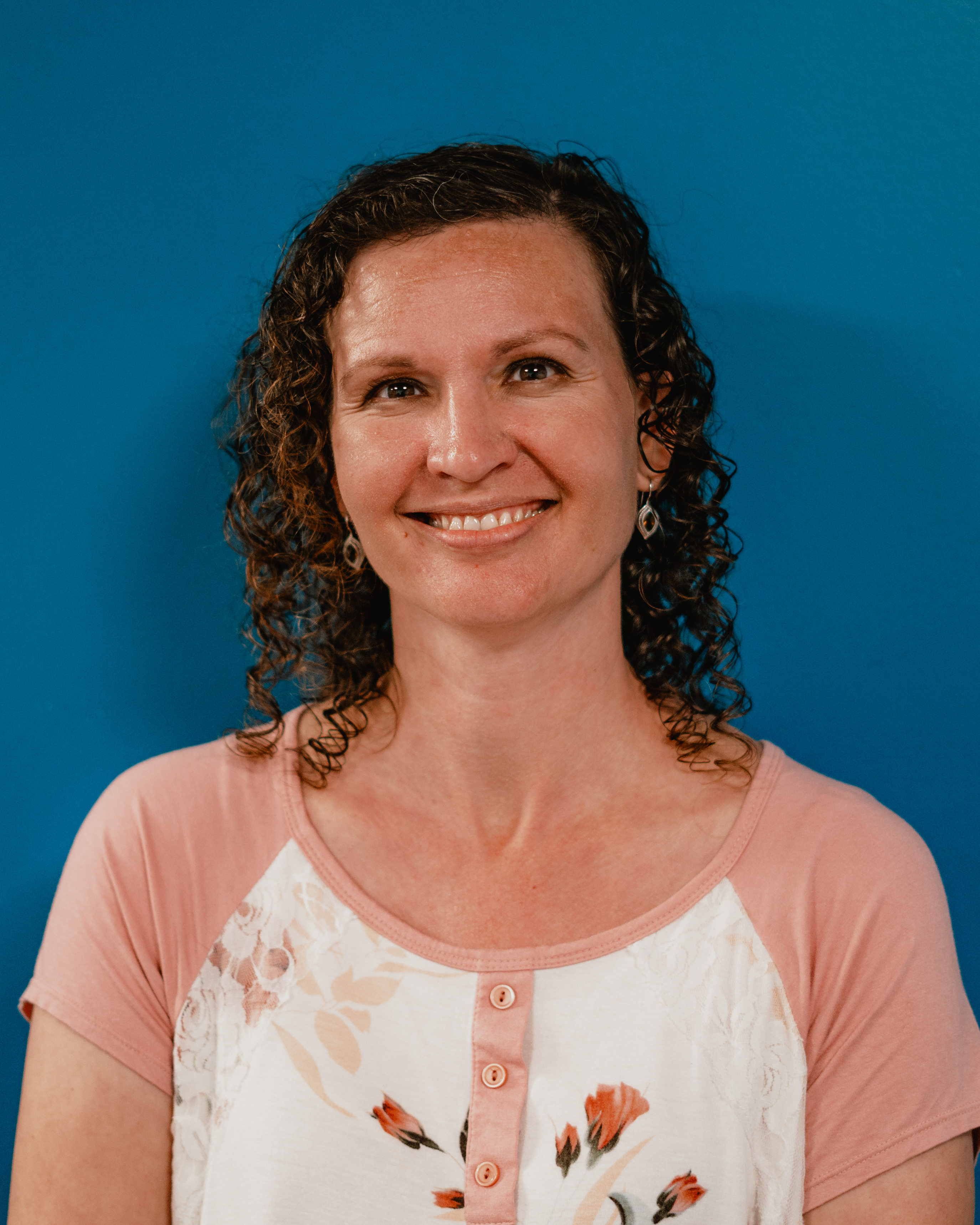
Alaina Mankin is a homeschool mom to three boys, and she has been a member of Northside Church since 2001. In addition to writing devotions for her church family, she also enjoys writing fiction, reading nineteenth-century novels, and drinking flavored-coffees. She has a degree in history from MTSU and has been published in Journey magazine.


Copyright Northside Church 2026